The World Health Organization (WHO) has raised alarming concerns regarding the rapid spread of the Ebola outbreak in the Democratic Republic of Congo (DR Congo), suggesting that the actual number of cases may far exceed current estimates. With over 513 suspected cases and 131 fatalities confirmed, experts fear the epidemic could be significantly larger than reported.
A local resident from the crisis-hit Ituri province, the epicenter of this severe outbreak, conveyed the community's deep-seated fear, stating, "Ebola has tortured us." This sentiment is echoed across the region, where many residents express confusion and uncertainty about how to safeguard their families. They describe the harrowing reality of infected individuals deteriorating rapidly.
Dr. Anne Ancia of WHO noted that ongoing assessments suggest a substantial under-detection of cases, emphasizing that initial models indicate there could already be over 1,000 infections. She highlighted the need for vigilant monitoring, saying, "The more we investigate, the more we realize the outbreak has likely spread across borders and to different provinces."
Amid mounting fears, the Red Cross warned that the situation is precarious, noting that without early identification of cases, weakened health systems, and lack of information in communities, the outbreak could spiral out of control. President Félix Tshisekedi of DR Congo has urged calm while calling for heightened vigilance among citizens, following a high-level crisis meeting dedicated to addressing the public health emergency.
WHO Director-General Tedros Adhanom Ghebreyesus, who recently labeled the outbreak an international emergency, expressed profound concern over its rapid scale and speed. He highlighted the urgent need to act before the situation deteriorates further.
Health interventions are challenged by high levels of insecurity in the Ituri province, where population movement complicates containment efforts. Notably, nearby South Kivu province and the large urban area of Goma, which has a population of approximately 850,000 and is influenced by regional conflicts, are also at risk.
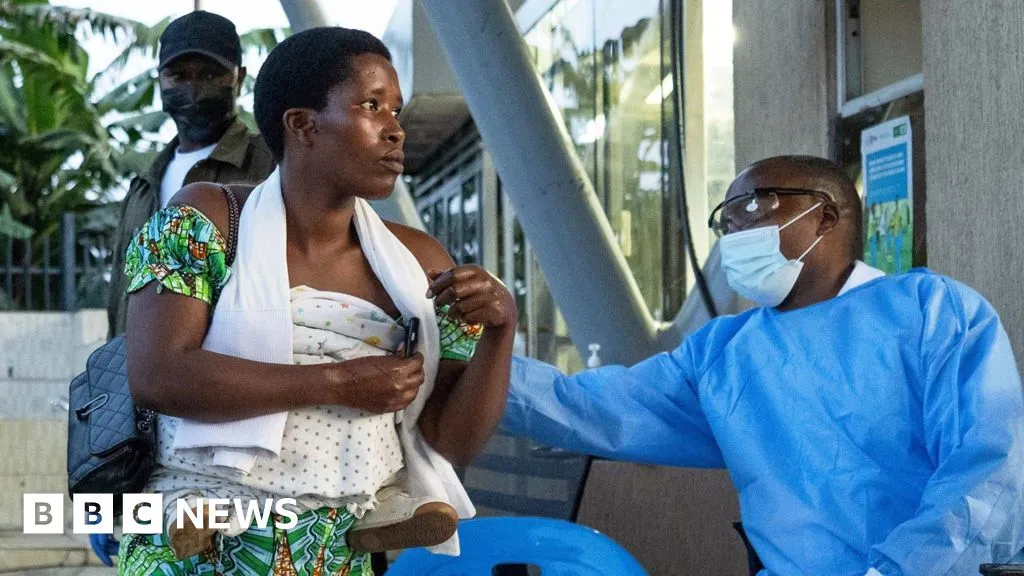
To combat this dire situation, WHO is dispatching critical health supplies, including personal protective equipment (PPE) and medical resources, to support health care workers in the affected areas. The outbreak's potential expansion has prompted neighboring countries, including Rwanda, to tighten border controls and enhance health facility readiness.
In a related development, a U.S. citizen identified as Peter Stafford, associated with a missionary group, has been evacuated due to suspect Ebola symptoms. The CDC is actively working to extricate other American individuals believed to have been exposed.
As health agencies ramp up their response, they are urging local communities to adhere strictly to preventative measures, report symptoms, and seek immediate medical attention to halt the spread of this deadly virus.
Source: BBC News - Health