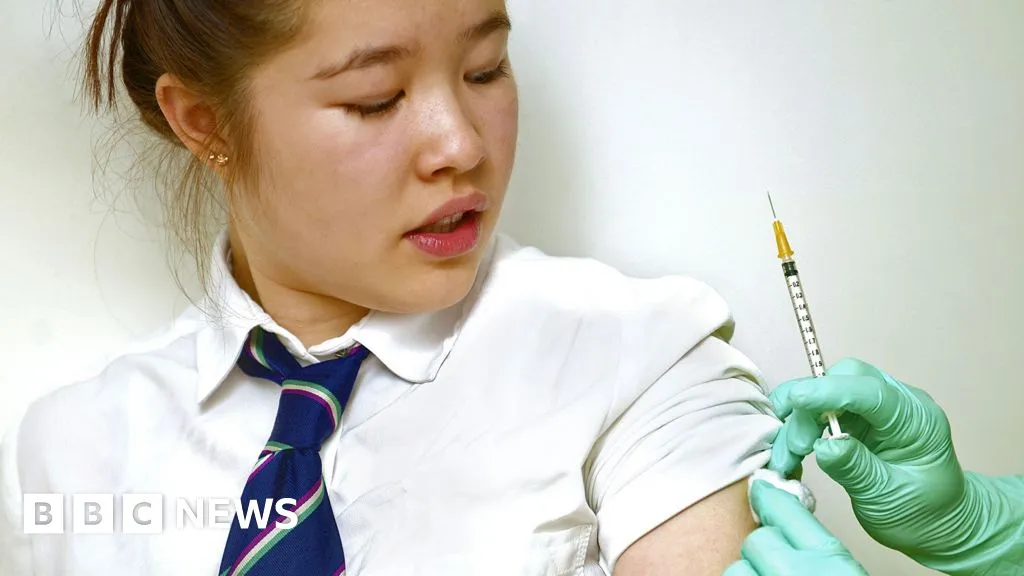
In a significant public health breakthrough, a landmark study has revealed that young women in England now face an almost negligible risk of dying from cervical cancer, thanks to the widespread implementation of the HPV vaccine since its introduction in 2008. The study indicates that vaccinations given to school-age girls have effectively saved hundreds of lives, with no cervical cancer-related deaths recorded in women aged 20 to 24 between 2020 and 2024—the first time such a statistic has been documented over a five-year span.
"It's incredible to think that a single jab can almost eliminate a particular type of cancer," remarked Professor Peter Sasieni, lead researcher from Queen Mary University of London. The data indicates that, without the vaccination program, approximately 23 deaths would have likely occurred within this age group during that period.
Despite cervical cancer remaining the 14th most common cancer among females in the UK, with 3,300 new diagnoses annually, the overwhelming majority of these cases—around 99%—are attributed to the human papillomavirus (HPV), a virus primarily spread through skin-to-skin contact. While most HPV infections resolve naturally, some can lead to severe and life-threatening complications, including cancer years later.
The authors of the report anticipate a continued decline in mortality rates from cervical cancer as vaccination uptake increases among younger generations. Michelle Mitchell, Chief Executive of Cancer Research UK, described the report’s findings as an “incredible milestone,” underscoring the need for renewed efforts to improve vaccination rates in England, which are currently lagging behind recommended levels.
Health authorities recommend that at least 90% of girls are vaccinated to consider cervical cancer eliminated as a public health issue. However, data from the UK Health Security Agency reveals that only 76% of girls in England were fully vaccinated by age 15 in 2024-25.
Alexandra Legg, a cervical cancer survivor who was diagnosed shortly before her wedding, has become a passionate advocate for the HPV vaccine. She revealed the traumatic impact of her diagnosis at age 30, reflecting, "I remember hearing the words, and I just couldn’t really breathe very well. It was so hard." Her experience underscores the importance of vaccination; she expressed that her life could have been spared much distress had she received the vaccine.
Professor Sasieni adds that the drop in mortality is just the “tip of the iceberg,” predicting even greater gains in life saved as vaccinated cohorts age and further studies reinforce the vaccine's efficacy. Nevertheless, he emphasized the crucial need to sustain high vaccination rates to protect future generations.
The UK government has set an ambitious goal to eliminate cervical cancer as a public health concern by 2040. However, the latest statistics indicate a worrying trend, with declining vaccination levels particularly affecting communities with lower uptake.
Dr. Sharif Ismail from the UK Health Security Agency has urged young individuals who may have missed out on their HPV vaccination to seek it out, emphasizing the vaccine’s role in not just protecting individuals, but also in reducing the overall transmission risk of HPV.
Since 2019, boys have also been included in HPV vaccination programs, providing protection against related cancers and contributing to a decrease in overall infection rates. The Department of Health and Social Care reaffirmed its commitment to achieving higher immunization levels, deeming the study a vital step in safeguarding the health of future generations.
For many, this groundbreaking research not only showcases the triumphs of modern medicine but also serves as a clarion call for increased health awareness and action against cervical cancer.
Source: BBC News - Health