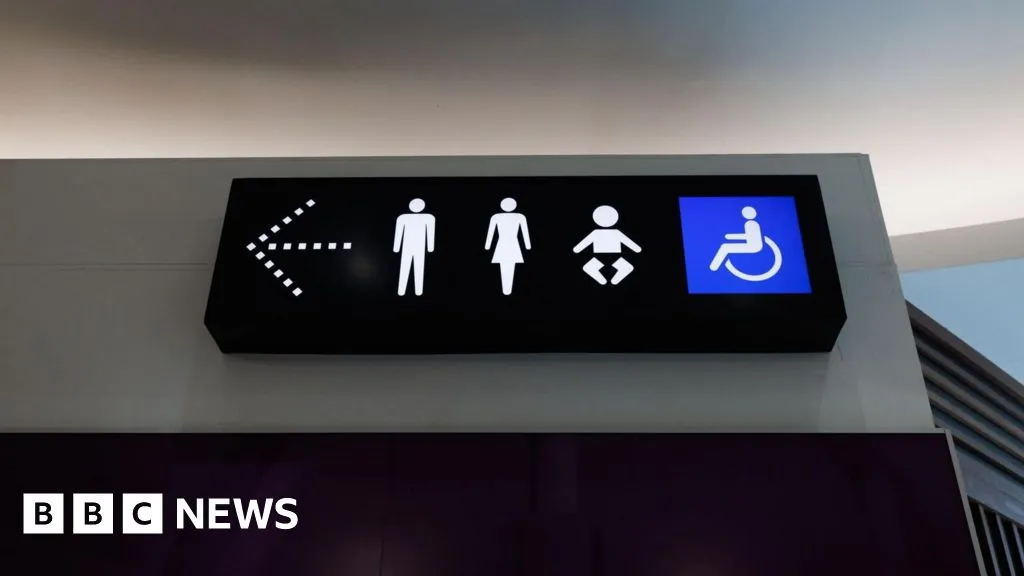
In a significant development following a landmark Supreme Court ruling, the Equalities and Human Rights Commission (EHRC) has published new guidance stating that public facilities such as toilets and changing rooms must be used based on biological sex. This directive, approved by government ministers, has reignited debates surrounding transgender rights and access to gender-specific spaces.
Key Provisions of the Guidance
The guidance, released on Thursday, specifies that a transgender woman—defined as a biological male identifying as female—should not access female facilities. Instead, it advocates for the establishment of third or gender-neutral spaces to ensure transgender individuals are not left without essential services.
“It is critical to strike a balance that allows the right to access facilities while upholding the legal definition of sex under the Equality Act,” said Women and Equalities Minister Bridget Phillipson. She emphasized that the intent is not to discriminate but to provide clear, actionable advice for public services, businesses, and organizations to effectively implement the law.
Implications for Public Spaces
The comprehensive guidance, stretching over 300 pages, applies to a multitude of settings, ranging from shopping centers to gyms and hospitals. Included recommendations entail that gender-neutral facilities should feature self-contained, lockable areas equipped with floor-to-ceiling walls to ensure privacy. The EHRC asserted that existing facilities could adapt by transitioning traditional male and female toilets into unisex options.
Notably, a delay in the publication of this guidance has drawn criticism. The EHRC initially forwarded the recommendations to the government in September 2025, expecting a thorough yet timely review. Instead, the process extended to eight months, prompting concerns about potential confusion and misinformation permeating public discourse.
Reactions from Various Stakeholders
Some advocacy groups see this guidance as a necessary step towards clarity in the public sphere. Maya Forstater of the gender-critical organization Sex Matters remarked, "There are no more excuses for organizations that have hesitated to enforce lawful policies due to uncertainty. At the heart of this guidance is a straightforward principle: 'sex' denotes male and female."
Conversely, community activists, such as Clare Reddington of the Watershed arts cinema in Bristol, criticized the lag in releasing guidance, describing the effects on transgender individuals as “toxic.” She pointed out that the delay has exacerbated uncertainties about the ability of trans people to navigate everyday public life.
Future Path and Legislative Review
With the guidance now tabled in Parliament, officials will have a 40-day period to voice concerns or objections. If no objections emerge, the guidelines will automatically assume statutory force, bringing them into effect.
As this controversial guidance unfolds, the discourse surrounding the implications for both biological women and transgender individuals continues to evolve, indicating an ongoing and dynamic conversation within UK society.
Source: BBC News
Source: BBC News - Health